Today · Gulf Edu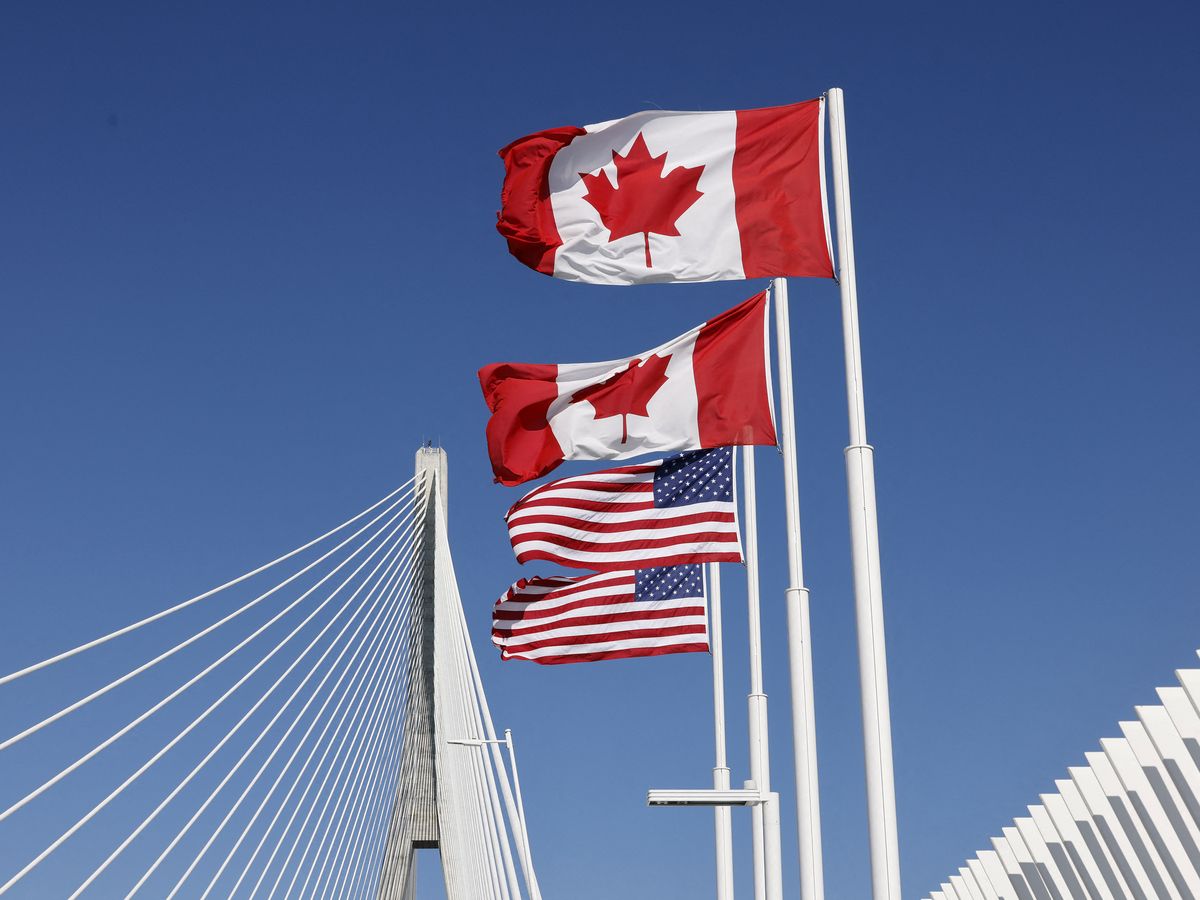
Skip to Content News Archives Economy Defence Energy Oil & Gas Renewables Electric Vehicles Mining Commodities Agriculture Real Estate Mortgages Mortgage Rates Finance Banking Insurance Fintech Cryptocurrency Defence Work Wealth Smart Money Wealth Management Investor Personal Finance Family Finance Retirement Taxes High Net Worth FP Comment Executive Women Puzzmo Newsletters Financial Times Business Essentials More Innovation Information Technology FP500 Podcasts Small Business Lives Told Tails Told Shopping Financial Post Store Obituaries Place a Notice Advertising Advertising With Us Advertising Solutions Postmedia Ad Manager Sponsorship Requests Classifieds Place a Classifieds ad Working Profile Settings My Subscriptions My Offers Newsletters Customer Service FAQ News Economy Energy Mining Real Estate Finance Defence Work Wealth Investor FP Comment Executive Women Puzzmo Newsletters Financial Times Business Essentials Home News Posthaste: U.S. businesses feel fresh pain from trade war with Canada, says this hot take on the economy Latest Federal Reserve Beige Book reports broken supply chains and damaged cross-border trade Last updated 1 hour ago Flags of Canada and United States fly across the international border on the Gordie Howe International bridge that connects Windsor, Ont., and Detroit, Michigan. Photo by JEFF KOWALSKY/AFP via Getty Images files Subscribe now to read the latest news in your city and across Canada. Exclusive articles from Barbara Shecter, Joe O'Connor, Gabriel Friedman, and others.
Daily content from Financial Times, the world's leading global business publication. Unlimited online access to read articles from Financial Post, National Post and 15 news sites across Canada with one account. National Post ePaper, an electronic replica of the print edition to view on any device, share and comment on.
Daily puzzles, including the New York Times Crossword. Subscribe now to read the latest news in your city and across Canada. Exclusive articles from Barbara Shecter, Joe O'Connor, Gabriel Friedman and others.
Daily content from Financial Times, the world's leading global business publication. Unlimited online access to read articles from Financial Post, National Post and 15 news sites across Canada with one account. National Post ePaper, an electronic replica of the print edition to view on any device, share and comment on.
Daily puzzles, including the New York Times Crossword. Create an account or sign in to continue with your reading experience. Access articles from across Canada with one account.
Share your thoughts and join the conversation in the comments. Enjoy additional articles per month. Get email updates from your favourite authors.
Create an account or sign in to continue with your reading experience. Access articles from across Canada with one account Share your thoughts and join the conversation in the comments Enjoy additional articles per month Get email updates from your favourite authors Sign In or Create an Account or Tariffs and the trade war with Canada are hurting United States businesses, according to the latest U.S. Federal Reserve ‘s Beige Book released Wednesday.
“Most of the trade tensions are mentioned in terms of the negative effect on manufacturing,” Robert Embree, vice-president and senior economist at Rosenberg Research & Associates Inc. , said of the U.S. economic survey. “We see that in New York. We see that in Boston.
We see that in Minneapolis. They’re all reporting adverse effects from tariffs or trade conflicts with Canada.” Issues arising from damaged cross-border trade with Canada came up in reports from several Fed banks, including those in New York, Minneapolis, Boston and San Francisco. Breaking business news, incisive views, must-reads and market signals.
Weekdays by 9 a.m. By signing up you consent to receive the above newsletter from Postmedia Network Inc. A welcome email is on its way.
If you don't see it, please check your junk folder. The next issue of Posthaste will soon be in your inbox. We encountered an issue signing you up.
Please try again For example, “a number of manufacturing contacts reported that tariffs were raising input costs, disrupting supply chains and damaging cross-border trade, particularly with Canada,” the Federal Reserve of New York’s portion of the report said. As a result, businesses said they were delaying capital spending and their planning had become more complex. Tariffs were a widely cited cost pressure for manufacturers, wholesalers and retailers, some of whom said they had “little room to pass costs on while others raised prices in response,” according to the Beige Book.
The Federal Reserve Bank of Minneapolis said its contacts reported “negative impacts” from the trade conflict with Canada, while the Federal Reserve Bank of San Francisco said exports to Canada, Mexico and the European Union have dropped in recent weeks. “This is only the beginning of the problems that are going to be caused if this trade war continues,” Embree said. The Beige Book also said there are increasing price pressures from commodities, tariffs and insurance, and that the lingering uncertainty around energy prices and tariffs likely mean prices will have to rise further over the next few months.
The U.S. recently imposed 50 per cent tariffs on a variety of Canadian goods that were previously exempt from levies under the Canada-U.S.-Mexico Agreement . Canada imposed dollar-for-dollar counter-tariffs, and then the U.S. banned some Canadian products, including alcohol, some dairy and motorcycles. “The U.S. tariffs and those small import bans together have caused firms across the Midwest and the northeast to reevaluate their entire supply chain,” Embree said.
“And these supply chains are deeply integrated. They go back to 40, 50, 60 years in some cases.” Several regional Fed banks also reported a decline in the number of Canadian visitors, indicating the drop in tourism is more widespread “rather than being a localized border community phenomenon,” Embree said. The number of Canadians returning from trips to the U.S. by car in September was 31 per cent below what they were in 2024, Statistics Canada said on Tuesday.
Sign up here to get Posthaste delivered straight to your inbox. Canada has the highest household debt among G7 nations, but the country is not facing a debt crisis, according to a new report from the C.D. Howe Institute think tank.
However, parts of the population are struggling to pay off their debts. Canada’s household debt service ratio (DSR), an indicator of households’ ability to pay off their debts, has dropped from its 2023 peak, according to C.D. Howe.
The DSR was at 14.5 per cent in the second quarter of 2026, compared with the first quarter of 2023, when it was at 15.17 per cent, according to the latest data from Statistics Canada . The DSR measures amounts owed on principal and interest as a proportion of household disposable income. However, younger, lower-income and highly leveraged Canadians are under pressure, C.D.
Howe said. — Serah Louis, Financial Post Read the full story here. Today’s Data : Canada manufacturing and wholesale sales, U.S. retail sales, Philadelphia Fed business outlook, Empire manufacturing survey of general business conditions, Earnings: Stimcell Energetics Inc., Pioneer Ai Foundry Inc., Klondike Silver Corp., Aurora Royalties Inc., D2 Lithium Corp., MDK Acquisition Inc., Charles Schwab Corp., Prologis Inc., First Horizon Corp., Alcoa Corp. Those in the top tax bracket in Ontario pay 53.5 per cent of every employment or taxable interest investment dollar to income taxes, but there are some Canadians who are paying an even higher rate yet have a lower taxable income.
If you’re in the dreaded Old Age Security clawback zone of income, you might be paying a 60 per cent tax rate on some of your income. Find out more here . The FP Atlantic Economic Report takes you behind the scenes of the business world in Atlantic Canada.
We’ll bring you insights from CEOs, government leaders, investors and economists on what’s making the regional economy tick and where it’s heading next. Sign up here Are you worried about having enough for retirement? Do you need to adjust your portfolio?
Are you starting out or making a change and wondering how to build wealth? Are you trying to make ends meet? Drop us a line at wealth@postmedia.com with your contact info and the gist of your problem and we’ll find some experts to help you out while writing a Family Finance story about it (we’ll keep your name out of it, of course).
Want to learn more about mortgages? Mortgage strategist Robert McLister’s Financial Post column can help navigate the complex sector, from the latest trends to financing opportunities you won’t want to miss. Plus check his mortgage rate page for Canada’s lowest national mortgage rates, updated daily.
Visit the Financial Post’s YouTube channel for interviews with Canada’s leading experts in business, economics, housing, the energy sector and more. Today’s Posthaste was written by Gigi Suhanic with additional reporting from Financial Post staff and Bloomberg. Have a story idea, pitch, embargoed report, or a suggestion for this newsletter?
Email us at posthaste@postmedia.com . Bookmark our website and support our journalism: Don’t miss the business news you need to know — add financialpost.com to your bookmarks and sign up for our newsletters here Join the Conversation This website uses cookies to personalize your content (including ads), and allows us to analyze our traffic. Read more about cookies here .
By continuing to use our site, you agree to our Terms of Use and Privacy Policy .
Source: Financial Post