Today · Gulf Edu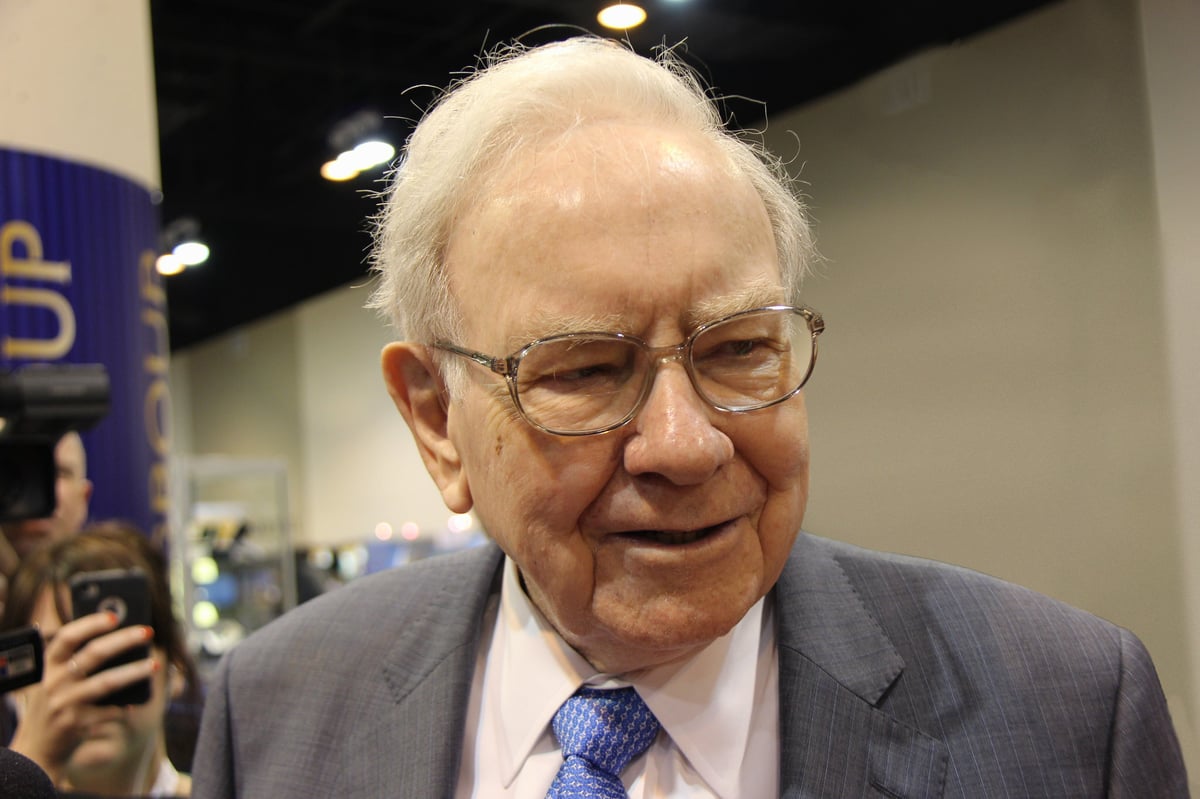
Warren Buffett is one of the world's most iconic investors. He served as CEO of Berkshire Hathaway from 1965 to 2025, turning it into a $1 trillion conglomerate with numerous subsidiaries, a stock portfolio worth over $350 billion, and another $365 billion in cash. Berkshire stock returned 19.7% annually during Buffett's 60-year tenure, so an investment of $500 in 1965 would have grown to a whopping $24 million by the end of 2025. Buffett always knew the average investor would struggle to replicate his performance, so he consistently advocated exchange-traded funds (ETFs) that track a diversified index, like the Vanguard S&P 500 ETF (VOO -0.56%), which he specifically recommended in 2014 for its ultra-low fees.
The Vanguard S&P 500 ETF provides exposure to the S&P 500, an index made up of 500 companies across 11 sectors. It has strict entry criteria: companies must have a market capitalization of at least $22.7 billion and be profitable. The S&P 500 is weighted by market capitalization, meaning the largest companies have a disproportionate influence. The technology sector, heavily weighted at 36.6%, includes companies like Nvidia, Apple, Microsoft, Broadcom, and Micron Technology. The AI revolution has significantly boosted the tech sector’s influence, contributing to the S&P 500’s recent returns of 13.9% since Buffett recommended the ETF in 2014. Excluding the tech sector’s impact, the S&P 500’s return drops to 63%.
The Vanguard ETF offers diversified exposure to the fastest-growing market area, making it a popular long-term investment. Historical returns show the S&P 500 has delivered 10.7% since its inception in 1957, with accelerated growth of 13.9% since 2014. A $20,000 investment at age 25 could grow to $1,166,634 by age 65 at 10.7% or $3,647,362 at 13.9%. The ETF’s expense ratio is just 0.03%, costing $3 annually for every $10,000 invested. Buffett’s advice suggests holding the ETF long-term for compounding benefits, which could fund retirement income.
Source: The Motley Fool